
 Core expertise
 Pentarch Systems Solutions
 Portfolio


Social and behaviour change communication: what actually works
Awareness campaigns are easy to run and hard to justify. Lessons from health, nutrition and social protection programmes on moving people from knowing to doing.
 Caroline Mukami NjueCommunications Director, Pentarch Communications3 November 20268 min read
- Most people already know what they “should” do. Find out what stops them.
- Design for the whole system around a person, not just the individual.
- Trusted messengers matter more than clever slogans.
- Test messages and materials with the people they are for, in their language.
- Measure behaviour and its drivers, not just reach and recall.
A great deal of public communication in Kenya still follows the same pattern: a poster, a radio spot, a social media push and a launch event, all designed to “raise awareness.” Awareness has its place, but it is rarely the problem. Most mothers know immunisation matters. Most young people know about HIV testing. The gap is between knowing and doing.
Social and behaviour change communication (SBCC) is the discipline of closing that gap. Here is what we have seen work, and fail, across health, nutrition, social protection and education programmes.
Start from the behaviour, and what blocks it
Define the behaviour precisely: who should do what, when, where and how often. “Improve nutrition” is not a behaviour. “Caregivers of children aged six to twenty-three months add an animal-source food to the child’s meal at least once a day” is.
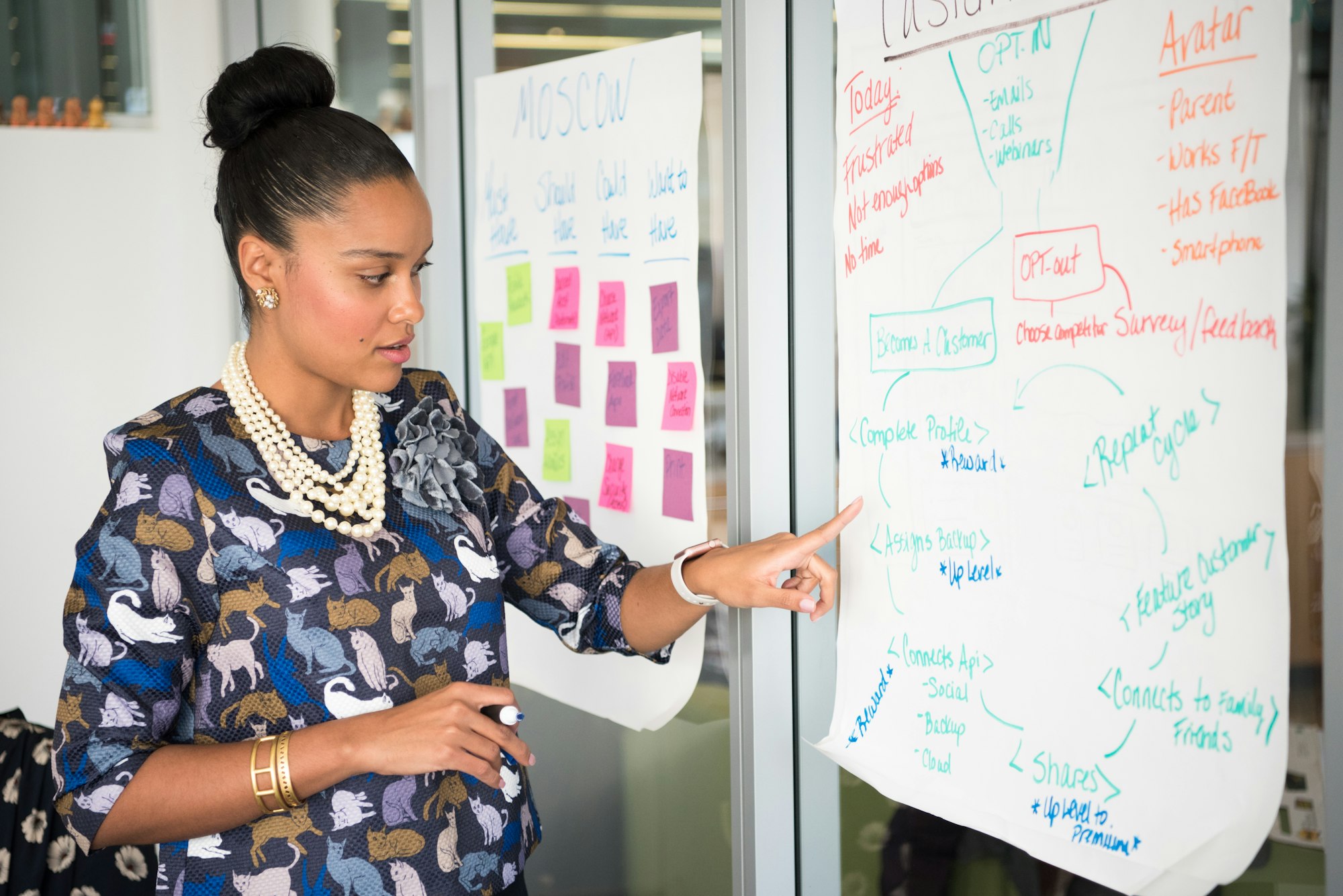
Then find the barriers. A useful lens is capability, opportunity and motivation: does the person know how, is it physically and socially possible, and do they want to? A mother may know eggs are good, but if they are sold at the market only on Thursdays and her mother-in-law decides what is cooked, a poster about protein will change nothing.
If your formative research only asks what people know, you will only design messages about knowledge.
Design for the whole system
People act inside families, communities, services and policies. The socio-ecological model is a reminder to plan for each level: the individual, the household and peers, the community and its leaders, the services people use, and the rules that shape all of them.
In practice that means pairing household messaging with work on the things around it: training health workers to be respectful, involving religious and community leaders, making the service easier to reach, or advocating for a policy change that removes a cost.
Trusted messengers beat clever slogans
Who says something often matters more than how it is said. Community health promoters, teachers, faith leaders, local radio presenters and peers carry a credibility that no national campaign can buy. Equip them well: short, clear guidance, answers to the questions they will be asked, and a way to report back what they are hearing.
Language matters too. Materials developed in English and translated at the end usually read like translations. Develop key messages in Kiswahili and the main local languages from the start, with native speakers in the room.
Test before you print
Pretesting is the cheapest insurance in communication. Before you produce at scale, take draft materials to small groups from each audience and ask:
- What is this asking you to do?
- Who is it for? Is it for someone like you?
- Is anything confusing, offensive or hard to believe?
- What would make you more likely to act on it?
We routinely see illustrations misread, words that carry unintended meanings and “obvious” instructions that are not obvious at all. Fixing them at draft stage costs a fraction of a reprint.
Use channels in combination
Mass media builds familiarity and makes a behaviour feel normal. Interpersonal channels, such as home visits, community dialogues and counselling, address doubts and build skills. Digital channels like WhatsApp and SMS reminders keep people on track. The strongest programmes combine all three and use each for what it does best.
Listen continuously
Rumours and misinformation move fast. A simple community feedback mechanism, through health workers, hotlines, radio call-ins and social media monitoring, tells you early when a message is not landing or a rumour is spreading, so you can respond while it is still small. This is the heart of risk communication and community engagement (RCCE) in outbreaks, and it works just as well in routine programmes.
Measure what matters
Reach and recall are easy to count and tell you little on their own. Track the behaviour itself where you can, and the drivers you set out to change: knowledge, attitudes, perceived norms, self-efficacy and access. Even a light-touch baseline and endline, plus routine programme data, will tell you far more than impression counts.
A quick SBCC checklist
- Is the behaviour defined precisely?
- Do we know the top three barriers for each audience?
- Have we planned for household, community and service levels?
- Are messengers trusted and equipped?
- Were materials developed in local languages and pretested?
- Is there a feedback loop and a plan to measure behaviour?
Designing an SBC or RCCE programme?
We support formative research, SBCC strategies, creative development, message testing, community engagement and the M&E to prove what worked.
Talk to our SBC teamCaroline Mukami NjueCaroline leads strategy at Pentarch Communications. She has written communication and SBC strategies with the Ministry of Health, UNICEF and AMREF and teaches communication at the University of Nairobi.