
 Core expertise
 Pentarch Systems Solutions
 Portfolio


Choosing a hospital management system for a Kenyan clinic or pharmacy
An offline-first checklist for pharmacies, clinics and small hospitals: what to ask vendors about connectivity, workflows, stock, billing, reporting, data protection and support.
 Stevedenzel Mungai MukamiLead, Pentarch Systems Solutions6 November 20268 min read
- Insist on a system that keeps working when the internet drops.
- Map your real patient journey and test the system against it.
- Stock, expiry and billing are where most money is lost.
- Ask how the vendor will handle SHA claims, eTIMS invoicing and reporting.
- Your data must be secure, backed up and exportable.
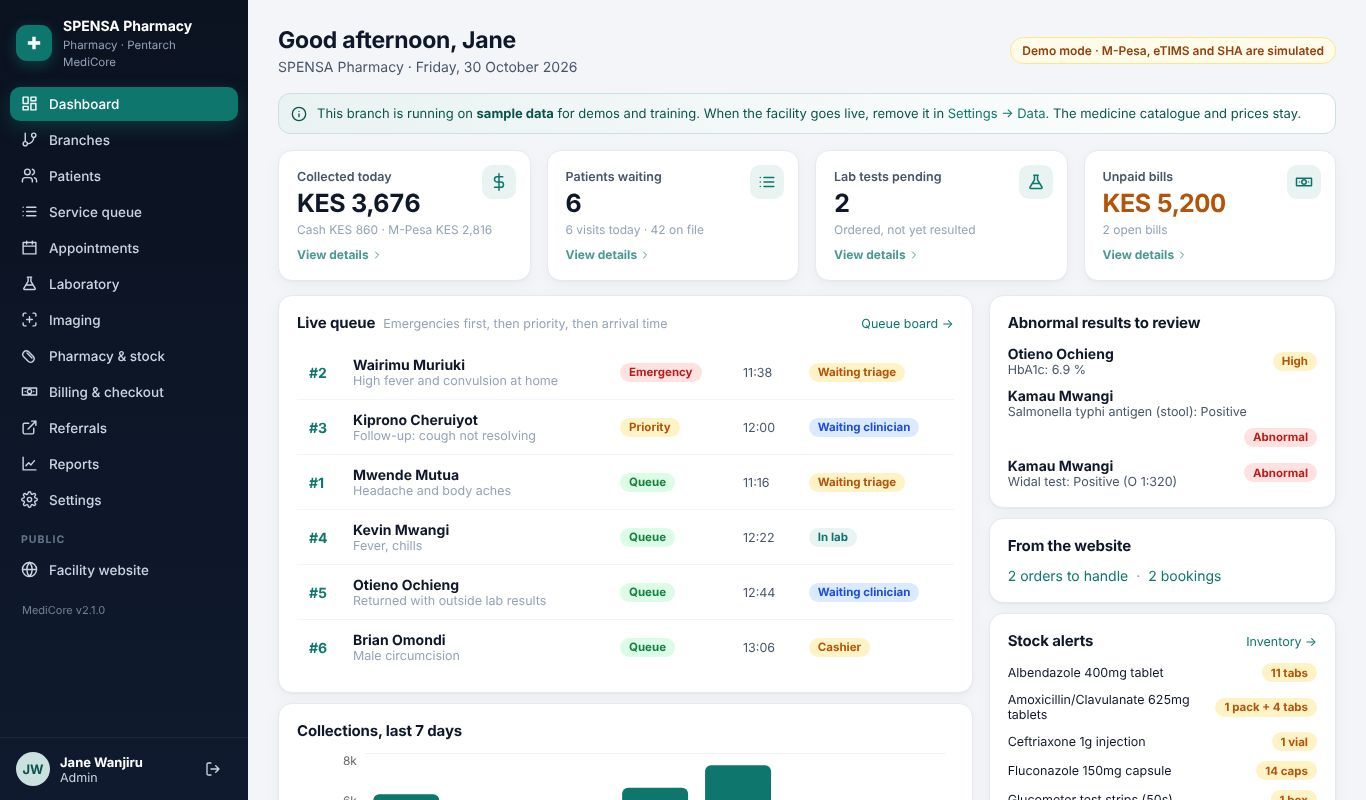
Many Kenyan facilities still run on a mix of paper registers, exercise books and spreadsheets. Moving to a hospital management system (HMIS) can reduce lost revenue, stock-outs and reporting headaches, but the wrong system becomes an expensive burden that staff quietly work around. These are the questions we ask, and the ones we built Pentarch MediCore to answer.
1. Does it work when the internet does not?
Connectivity in many facilities is unreliable. A purely cloud-based system that freezes when the network drops will push staff back to paper within weeks. Look for an offline-first design: the system runs on the local network or device, keeps every transaction, and syncs to the cloud when the connection returns.
2. Does it match how your facility actually works?
A pharmacy with a small lab, a maternity clinic with thirty beds and a general hospital have very different journeys. Before any demo, walk through your own: registration, triage, consultation, lab, pharmacy, billing, admission, discharge and referral. Then ask the vendor to show those exact steps with sample data, not a generic tour.
- Can you choose which modules a facility uses, and add a lab or wards later?
- Does it handle referrals out for tests or scans, and bring the results back to the patient record?
- Can several branches share one dashboard while keeping their own stock and cash?
3. Stock, expiry and billing
This is where facilities lose the most money. Check that the system tracks batches and expiry dates, warns before stock runs out, records every item dispensed against a bill, and produces a daily cash-up that reconciles cash, M-Pesa and insurance. Ask to see how a refund or a cancelled bill is recorded and who can approve it.
If you cannot see who changed a bill and when, you do not yet have control of your revenue.
4. Compliance and reporting
Ask every vendor how their product handles, or will handle, Social Health Authority (SHA) claims, KRA eTIMS invoicing, routine reporting to the Ministry of Health, and the requirements emerging under Kenya’s digital health framework. A clear, honest roadmap is better than a vague “yes, it does everything.”
5. Data protection and security
Health records are sensitive personal data under Kenya’s Data Protection Act, 2019. At a minimum, look for individual log-ins with role-based access, an audit trail, encrypted backups, and a written agreement on who owns the data. You should be able to export your records at any time.
6. People, training and support
- Is training included for every role, on site?
- Is there a local support line that answers during clinic hours and weekends?
- How are updates delivered, and what happens if something breaks on a Saturday night?
7. Total cost, not just the licence
Compare set-up, training, hardware, hosting, support and future modules over three years. A cheap licence with expensive surprises is not cheap.
Questions to ask in every HMIS demo
- Show me a full patient visit with lab and pharmacy, offline.
- Show me a stock-out warning and an expiry report.
- Show me the daily cash-up and a cancelled bill.
- How do I add a second branch?
- How do I export all my data?
- What is on your roadmap for SHA and eTIMS?
See Pentarch MediCore in action
MediCore is our offline-first HMIS for pharmacies, clinics and hospitals, now in pilot. Book a demo with sample data and we will walk through your workflow.
Book a MediCore demoStevedenzel Mungai MukamiSteve is an engineer and full-stack developer who leads Pentarch Systems Solutions, including Pentarch MediCore, Pentarch Portal and the websites we build and host.